Self-guided layout tours will be available on Thursday, Friday, and Saturday afternoons. If layout owners are available, additional tours may be offered on Wednesday and Sunday afternoons. Detailed tour information, including addresses, will be provided to registered convention attendees during the event.
If you have a model railroad layout—any scale, indoors or outdoors—that you’d be willing to share on one or more afternoons between April 29 and May 3, please reach out to our Layout Tours Chair at layouts@pcr2026.org
Ron Kaiser – Western Pacific
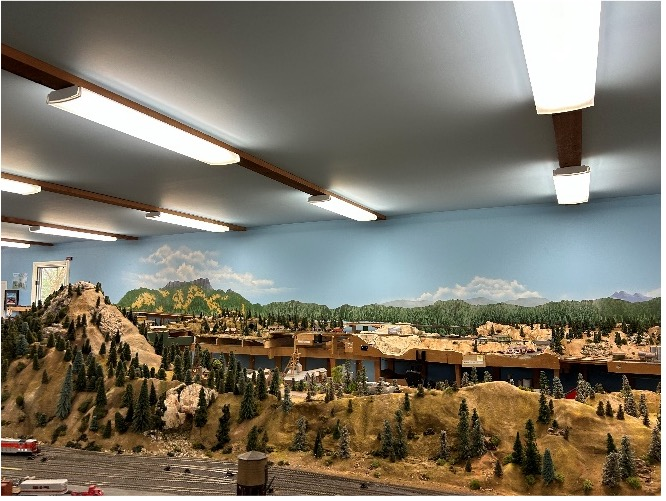
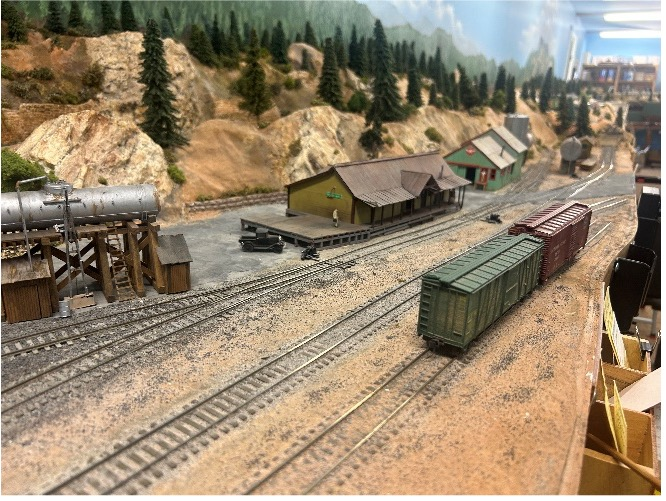
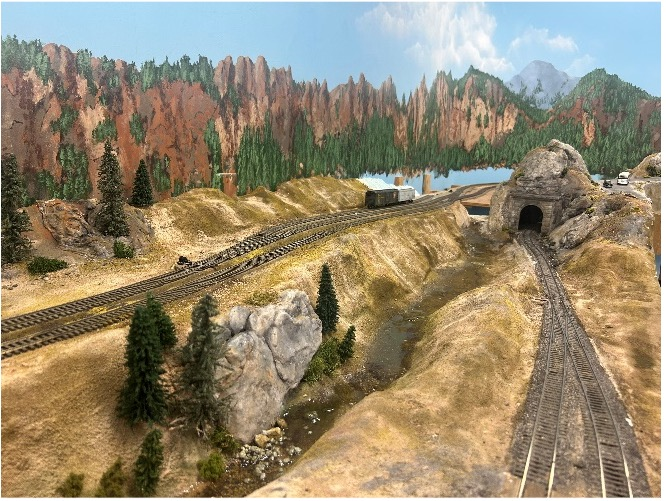
This panoramic HO-scale layout fills a 24′ x 50′ building, all on a single level, with scenery nearly complete. Even the staging yards at Sacramento and Winnemucca are fully accessible. The layout originally occupied a smaller building, but in 2013 it was moved to its current home—cut into sections to fit through the door. About 60% of the original layout was reused, with staging moved out of its helix locations and new sections added to enhance both scenery and operations.
The Feather River Route is represented with scenes of Oroville, Keddie, Quincy Junction (with the Quincy Railroad extending to the town of Quincy), Blairsden, Graeagle, and Portola. Structures are primarily kit-built, with some scratch-built stations, set against a backdrop enhanced by water features, rockwork, and nearly a thousand hand-made trees. Operations feature a mix of steam and diesel power, with rolling stock appropriate to 1952.
Dave Croshere – A B & Old C
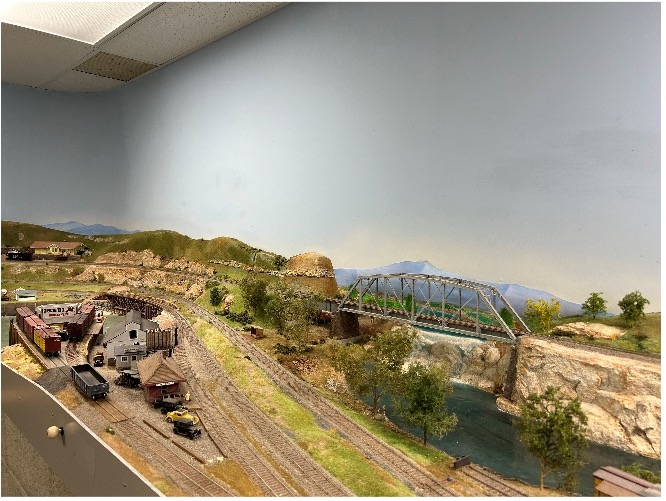
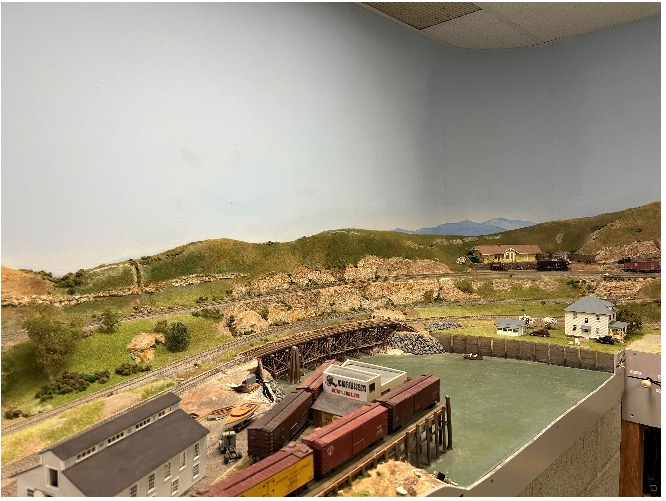
The basement layout occupies 435 square feet, divided into two rooms, and is modeled circa 1936—an era when steam was king and small railroads thrived.
A large switching yard serves as the centerpiece, complete with an operating turntable, roundhouse, interlocking tower, ash pit, coaling station, and water towers. The tightest curve measures 34½” radius. All track is hand-laid and 95% complete. I’ve also built every switch by hand—approximately 100 in total—including one three-way and one double-slip.
The railroad is operated end-to-end, with wye turnarounds at both ends. To support operations, I designed and built a vertical staging system, which has proven both reliable and unique, operating flawlessly for over eight years.
Currently, about one-third of the layout is scenicked. Structures are a mix of scratch-built and kit-built, with several of the scratch-built models having earned national and regional contest awards.
Ed Merrin – Northwestern Pacific Railroad
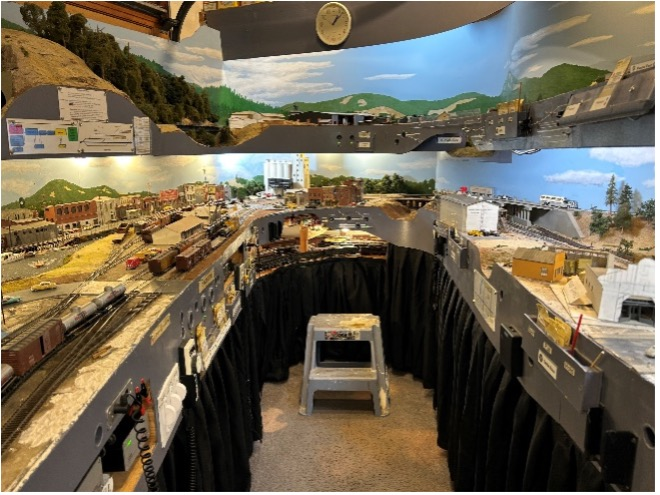
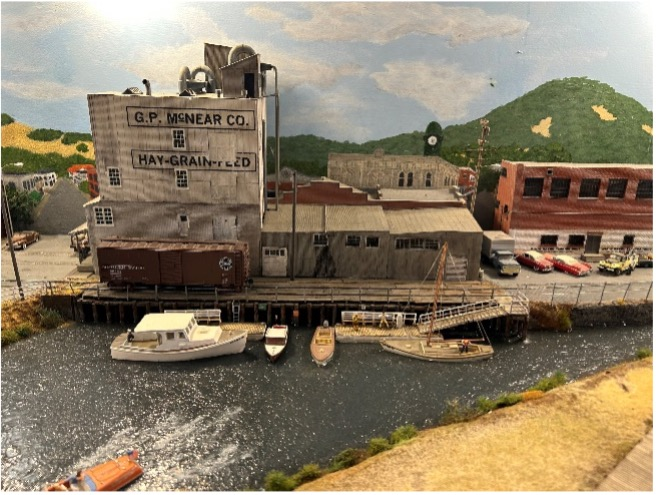
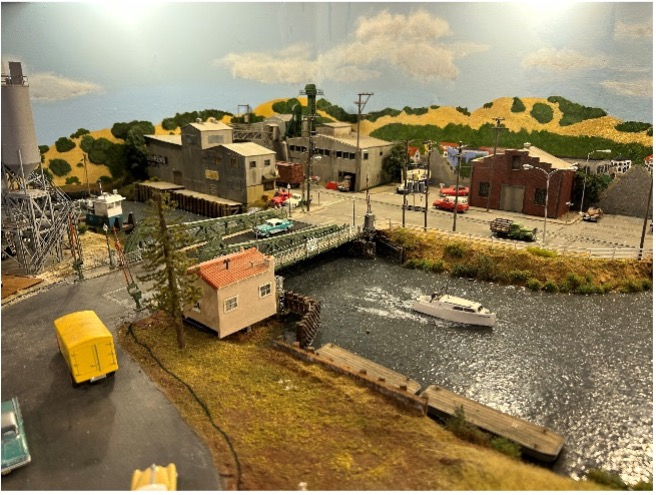
The goal of this HO scale layout is to capture the look and feel of the late 1950s Northwestern Pacific Railroad. The 13×17 foot layout features two visible levels, with a third level below for staging, all connected by two helixes. The lower level depicts scenes in Sonoma County, including the towns of Petaluma and Santa Rosa, and on the upper level are parts of Mendocino County, including the division point at Willits.
Like its 1958 prototype, motive power is dominated by EMD SD7s, with a few SD9s, mostly in the Black Widow paint scheme. Most engines have sound. Operationally, the most significant business of the railroad is bringing lumber down from the northern counties on second-class freights, (compass south but SP westward) with empties returning on eastward extras. There are also locals and passenger service. The Petaluma and Santa Rosa Railroad, once an independent electric line but now dieselized and an NWP owned subsidiary, is also depicted, with separate trackage and live interchanges.
Nearly the entire layout has at least basic scenery. There are both scratchbuilt and kitbashed trestles and bridges and a growing number of structures based on prototype facilities and scenes.
Gus Campagna – Calif Western Railroad
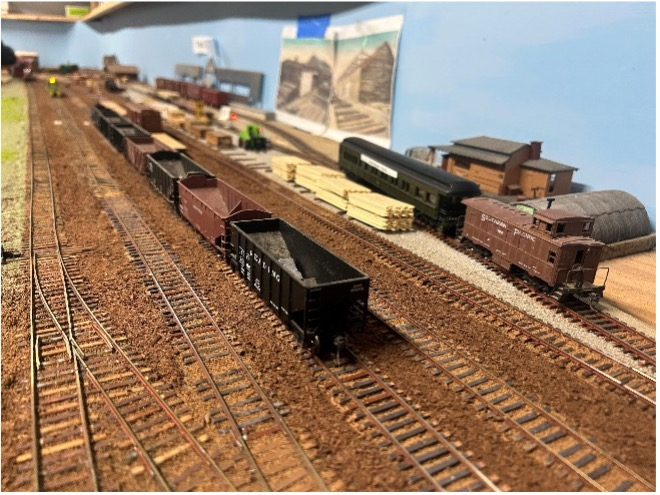
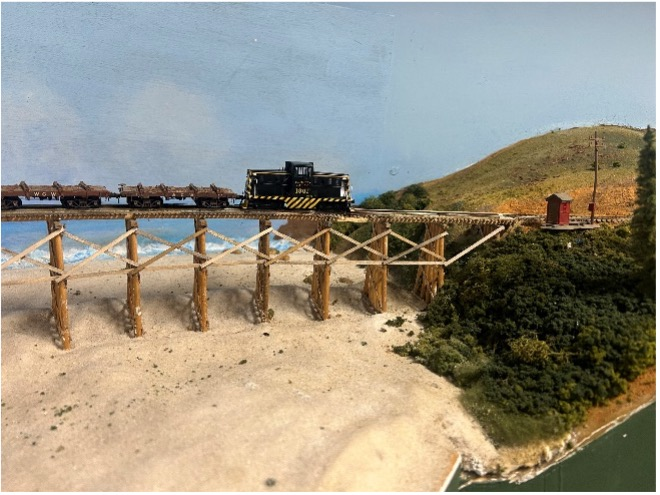
This triple-deck layout fills a large garage and includes a connecting crew lounge. It is powered by Lenz DCC, with 270 feet of mainline track, mostly hand-thrown turnouts, and both steam and diesel operations.
The prototype California Western Railroad (CWR) was a 40-mile line connecting Fort Bragg with Willits on the NWP mainline. On the layout, the Willits section stretches 50 feet and connects to staging at both ends. Operations are run point-to-point using Timetable & Train Orders.
Scenery is steadily progressing upward from the first level, which also includes a continuous run made possible by a removable bridge spanning the doorway.
Mick Spillsbury – The Black Canyon RR
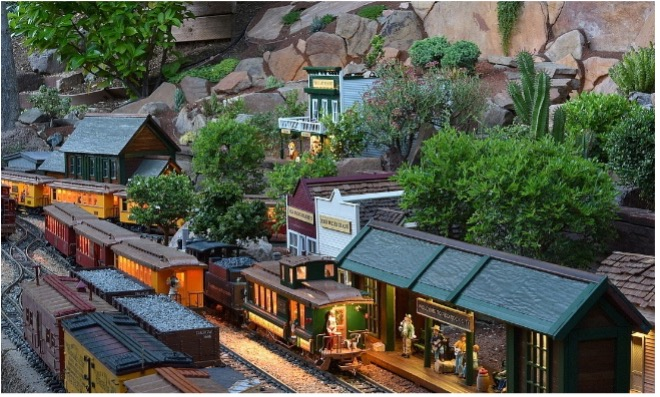
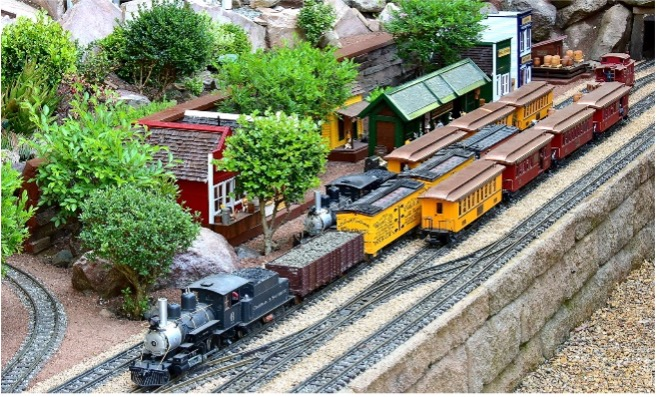
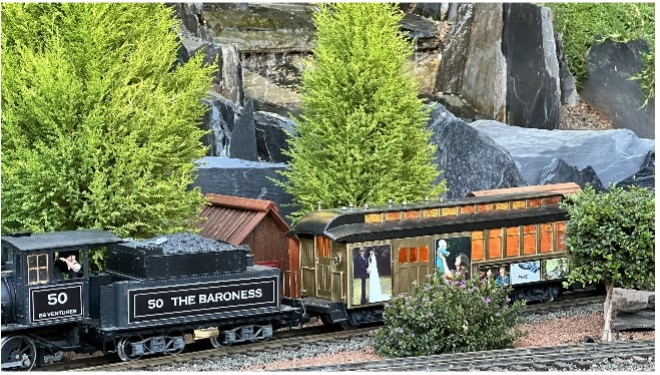
The Black Canyon Railroad is a G Scale garden railroad set in the fictional Black Canyon, San Rafael, during the year 1899. The layout features a 350-foot dogbone mainline, with a total of 450 feet of track arranged for easy viewing.
Operations are handled with remotely controlled, battery-powered locomotives, all equipped with sound. More than 40 structures and dioramas, along with over 250 scale plants, help create a realistic and immersive environment. Additional atmosphere is provided by more than ten trackside sound effects, a 15-foot tunnel, a 15-foot canyon, and a waterfall.
The entire railroad is fully lit for night operations, and it incorporates several design innovations that reduce maintenance and ensure reliable performance.
Ed Jameson – SP SF
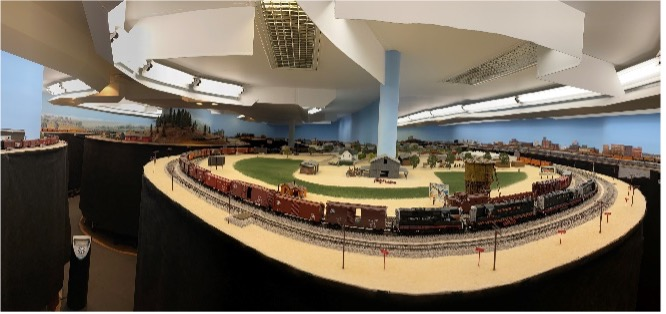
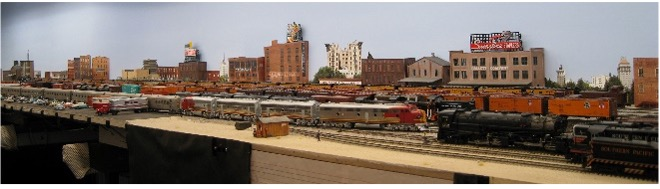
800 sq. ft. fully landscaped layout with double-tracked main, covering the Central Valley (Fresno area) and Mountains. SP and Santa Fe, 1956 Transition era, plus a sawmill/logging railroad. NCE digital control with sound decoders.
Tom Comyns – TCRR
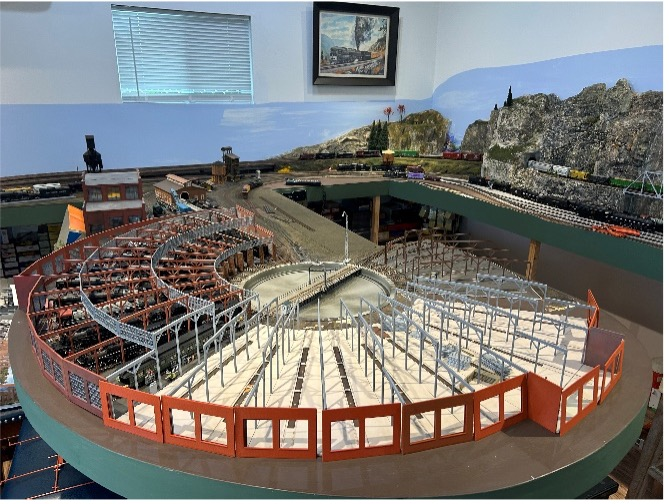
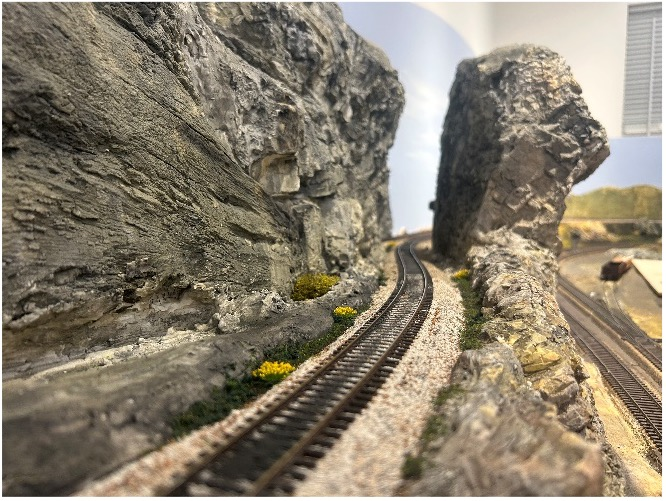
This freelance layout is in a purpose built building 14 x 18 Mostly Southern Pacific and Santa Fe steam locomotives. Three main lines for continuous running with a small yard and some switching activities. centerpiece is a 30 stall roundhouse filled with large steam locomotives and 130 foot turntable. About 75% of the scenery is completed.
Richard Schoenstein – large three rail layout O gauge
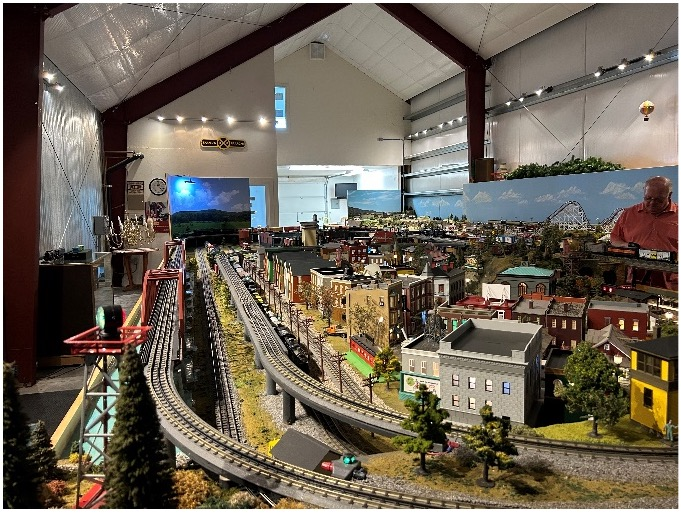
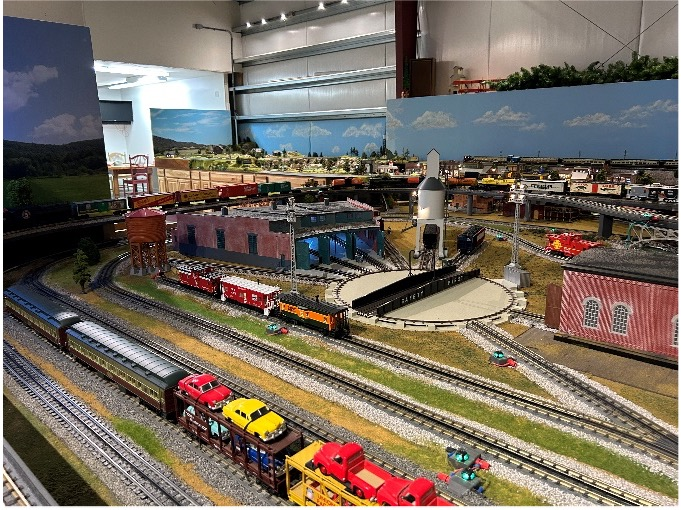
This RS layout is very large (70’ x 30’ plus) single level free-lance located in a former RV garage. Most structures and scenery are in place. There is also an animated baseball game and amusement park plus a complete town. Control is by an MTH control system with a Lionel sound system. The layout allows for very long trains and motive power includes a Great Northern 2-8-8-2 locomotive.
Ken Brody – The Westie Line
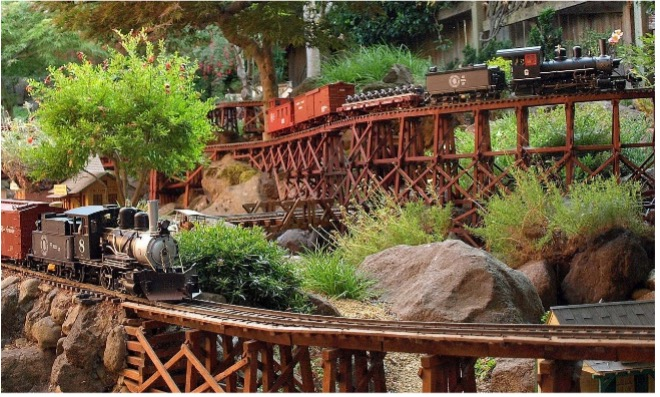
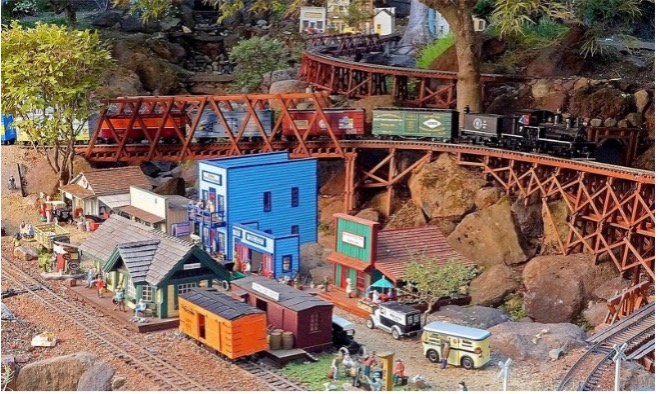
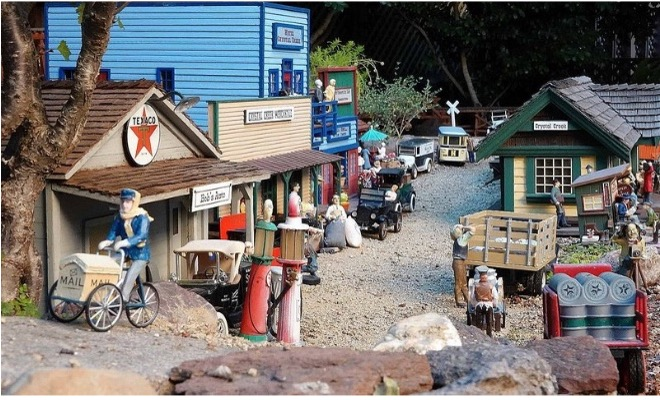
The Crystal Creek & Rock City West Railroad, better known as The Westie Line, is over 30 years old. It consists of more than 400 feet of mainline track that winds its way up 5 feet in elevation from the Town of Crystal Creek via Rock City to the sparsely inhabited West Highland Terriertory. Detailed scenes, multiple trestles and tunnels as well as a pond, creek, and extensive landscaping make for a very photogenic layout.
Rich Mossholder – Silvertongue Southern and Ileton Sub
I have two layouts in my basement.
The Ileton Sub is an N scale switching layout built on a shelf that measures 16” at its widest point and is 30’ long.
The time period for this layout is early to mid 1960’s along the California coast. It has an elevator to bring trains to a future upper deck for more switching capabilities. This layout is currently in the track laying phase, and will be controlled using wireless DCC.
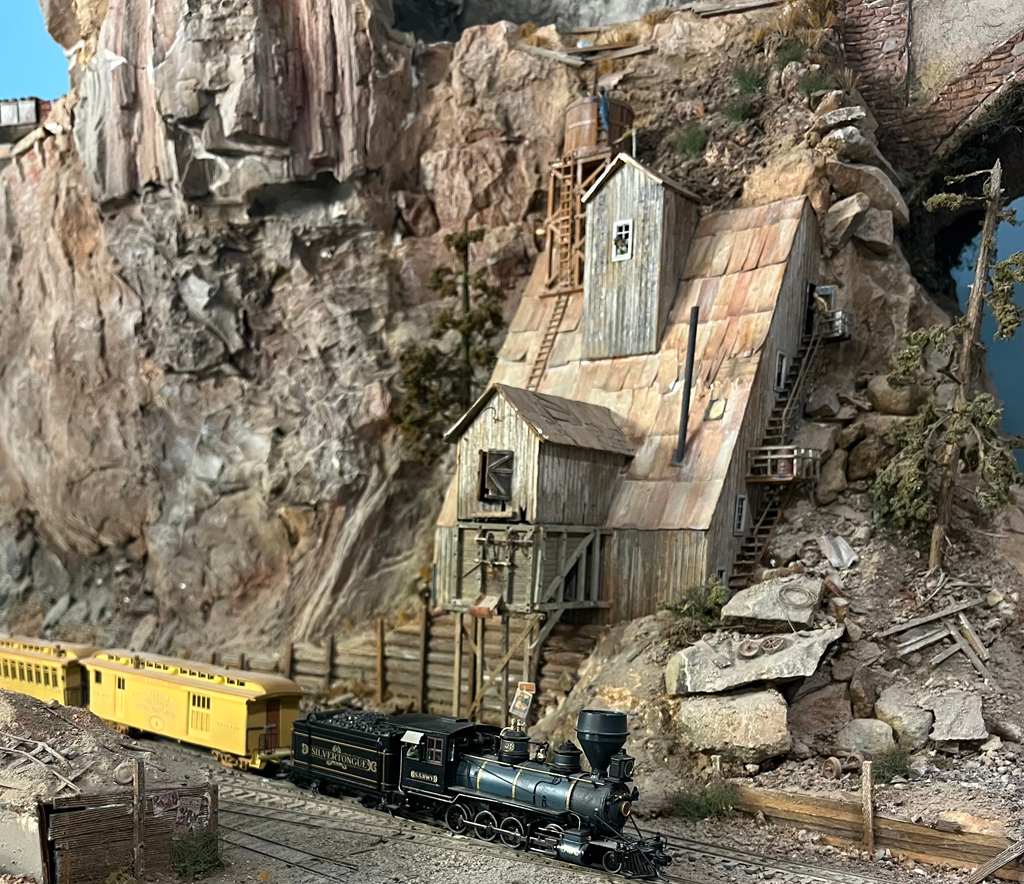
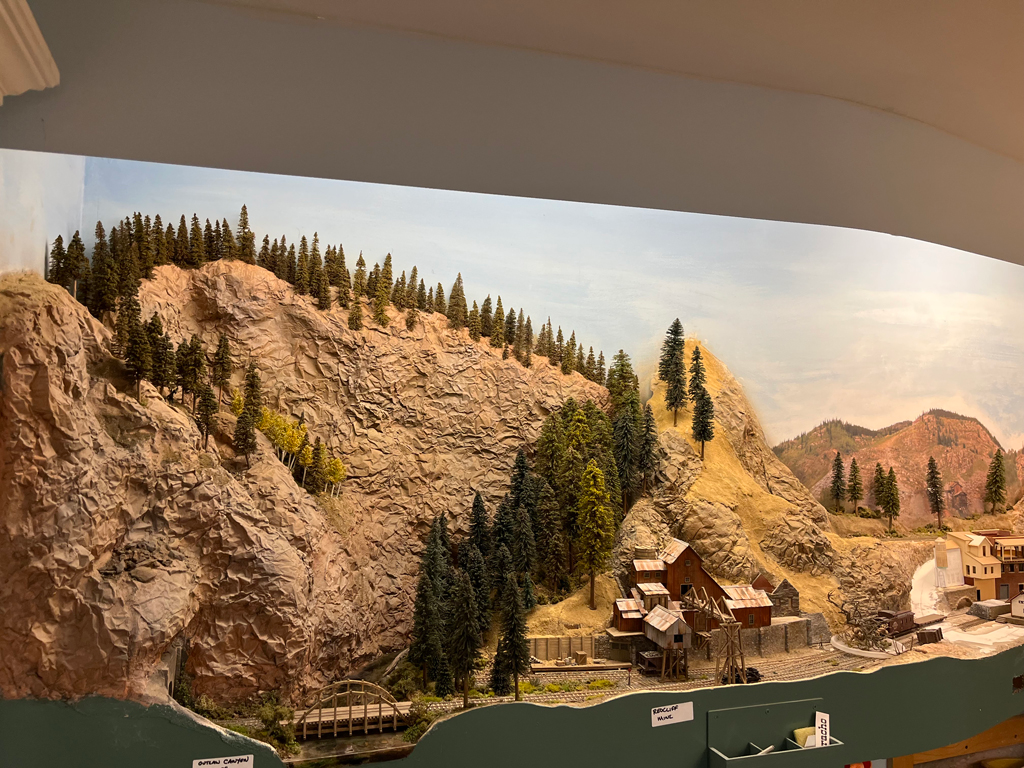
My main focus in model railroading is my HOn3 basement empire. It is completely fictional and is roughly set in the 1920’s. The Silvertongue Southern occupies three rooms and a hallway. Total area measures roughly 16’ x 50’. The layout is in various stages of construction ranging from benchwork to completed scenes. The layout operates with a Digitrax DCC system with wireless control.
I recently tore out a major section of the layout to incorporate all that remained of Malcolm Furlow’s original Denver & Rio Chama Western. This has been a fascinating journey for me learning how to blend, replicate, and combine his scenic style with my own.
Jim Providenza – Santa Cruz Northern
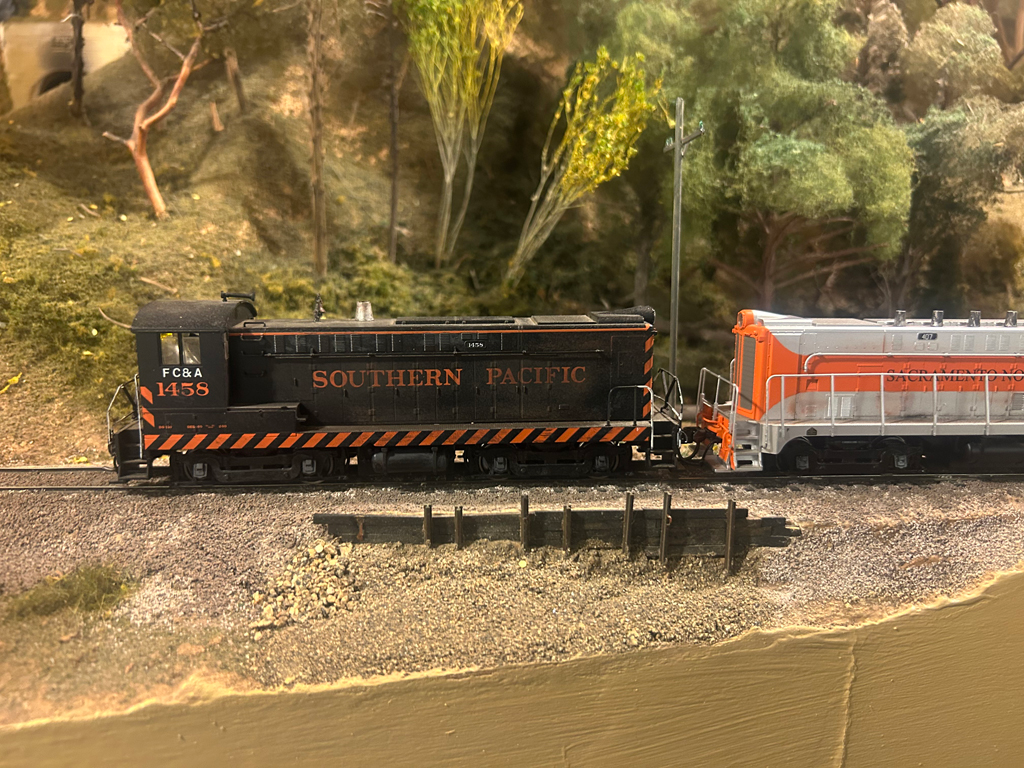
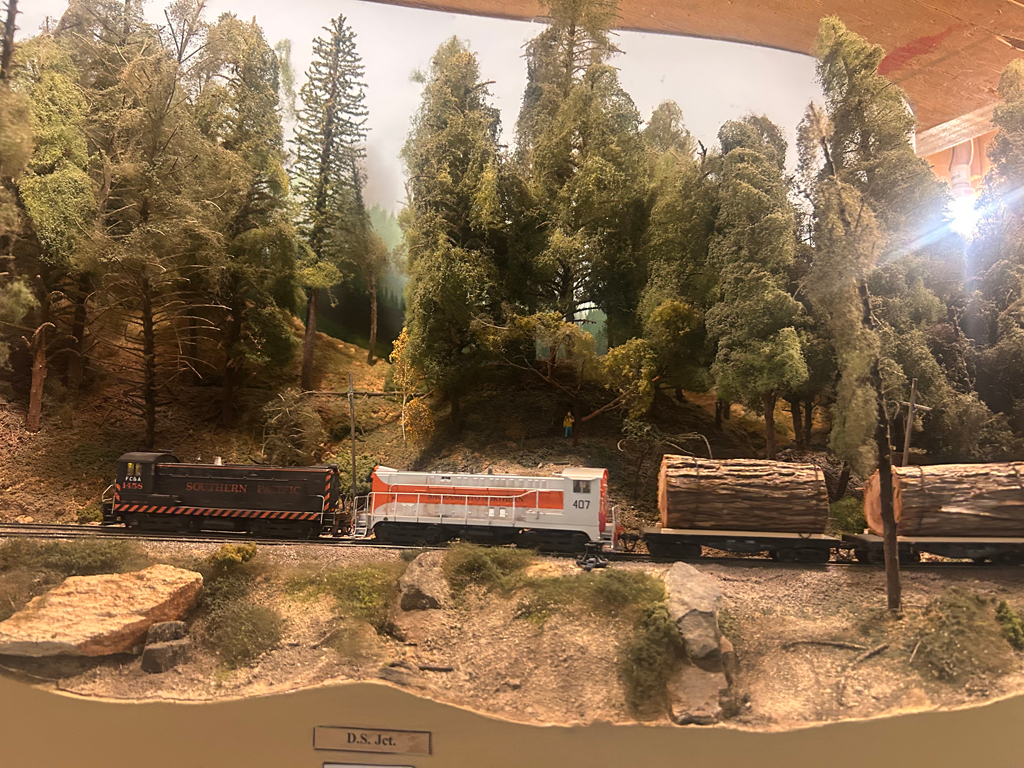
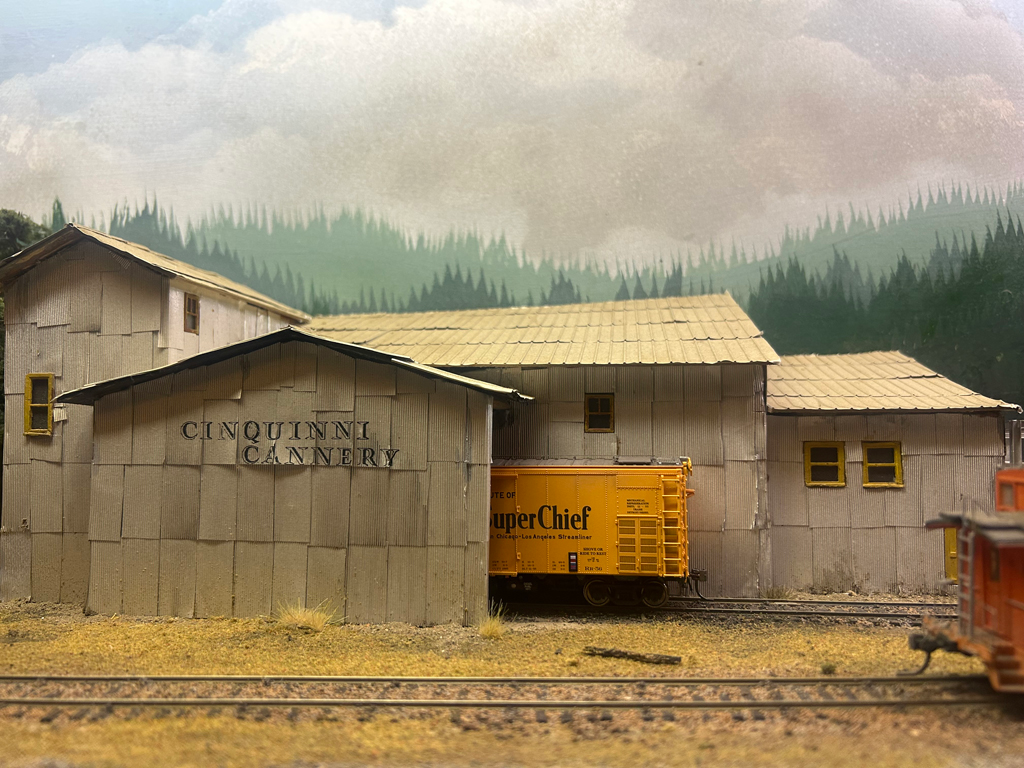
The layout located in a garage, is a point-to-point double deck single track with 265 feet of mainline, 45 feet included in a helix. Five major sidings average 15 feet long. The SCN is jointly owned by Western Pacific sub running from San Jose to Santa Cruz and set in the early 1970s. Power is second hand or leased with traffic of industrial products from San Jose, ag products from Santa Clara Valley plus wood products and cement from Santa Cruz. Control system is NEC DCC.
Bill Horstmeyer – Oregon I-5 Corridor
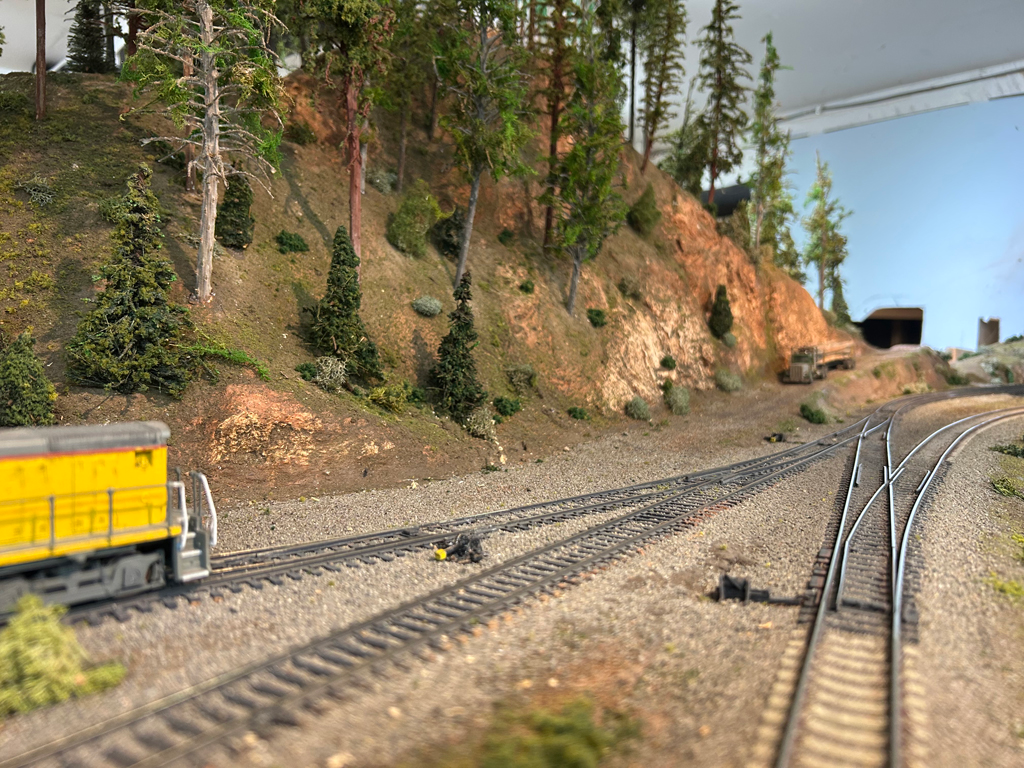
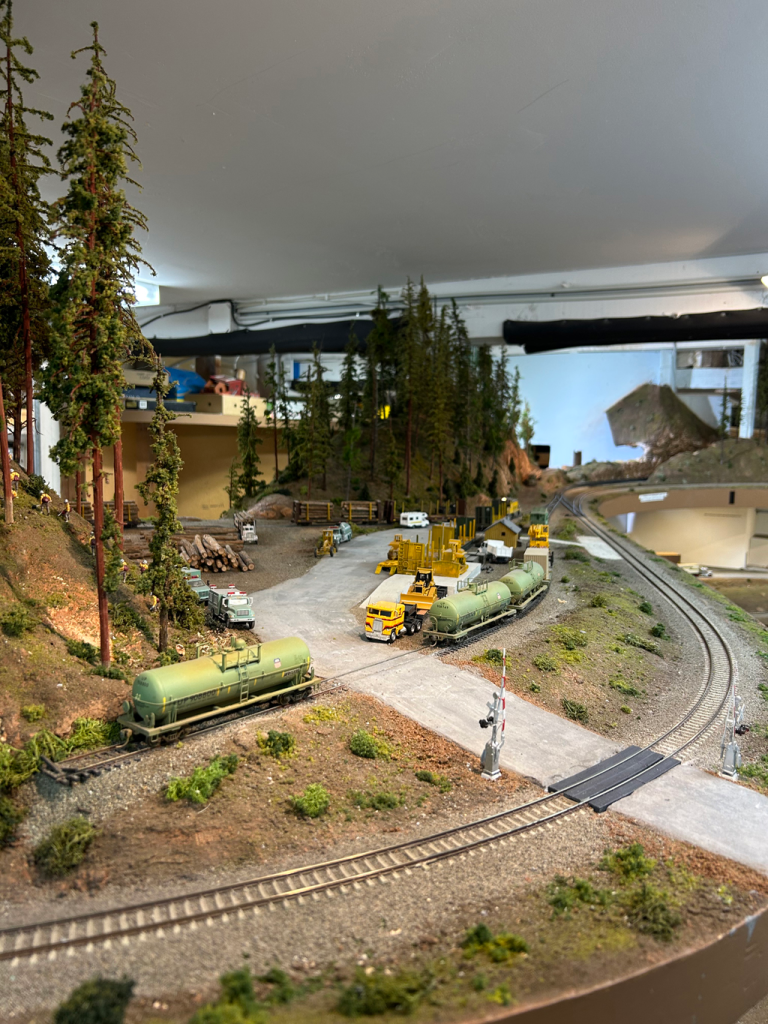
The layout is set in Southern Oregon, it’s main line runs on the Union Pacific between Portland and Klamath falls in a modern setting. There are 300 feet of main line that cross the cascades in Oregon. There are two branch lines that are run by regional railroads, the Central Oregon and Pacific (CORP), and the Portland and Western. There is both yard and branch line switching on the layout.
A typical session runs about 5 hours and uses 8 operators.
CVP Easy DCC with wireless throttles, FRS Radios
Cliff Baumer – Anchor Bay Railroad
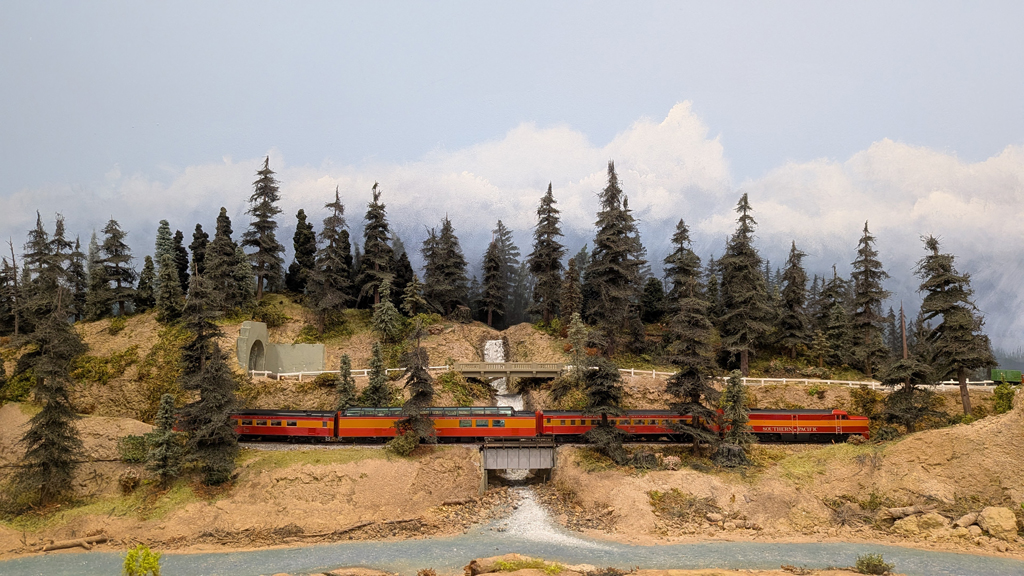
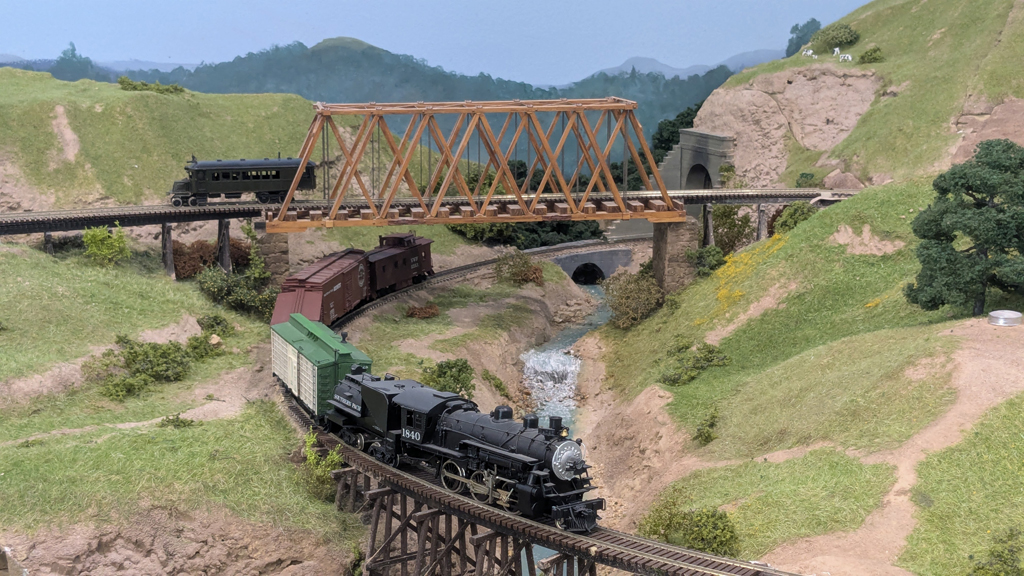
A 19×17′ layout inside its own custom railroad depot outbuilding capturing the beautiful “Redwood Empire” north of San Francisco Bay in the late 1940s. Heavily inspired by the Northwestern Pacific (NWP), California Western, Petaluma & Santa Rosa, and other California shortlines, the Anchor Bay Railway connects a sparkling harbor town with the SP in the Central Valley.
The layout uses custom plywood construction, insulation foam and features striking hand-painted backdrops done from photographic reference. The route is a very obscured folded figure eight designed to look like a single track mainline from the valley to the coast. It also has a long branch that connects with the Sacramento Northern railway, serving wineries and a large mill at the end of the branch.
The layout is about 50% scenicked currently but should be close to 100% by convention time.